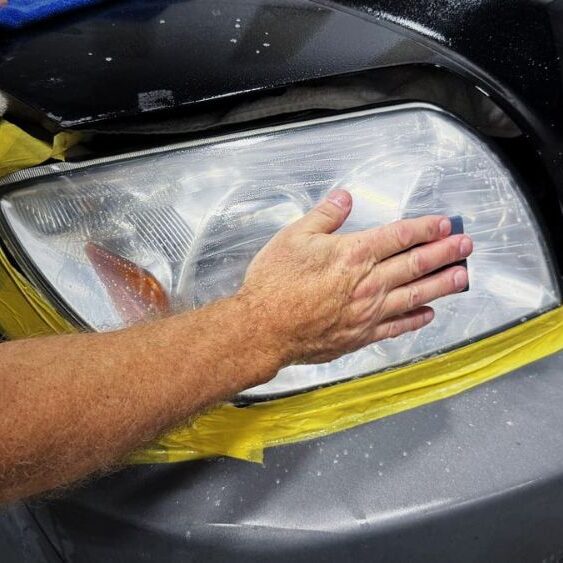
Yellow headlights are usually caused by UV oxidation, but headlight restoration and ceramic coating can help restore clarity and protect them for longer.
Yellow headlights are a very common problem in Melbourne: If your car has yellow headlights, you’re definitely not alone. Strong UV exposure slowly wears down the surface of modern headlight lenses, which is why so many cars end up with faded, cloudy, or yellowed headlights over time.
UV oxidation is the main reason headlights turn yellow and hazy. Most headlights are made from polycarbonate plastic and come with a factory UV protective layer. As that protection wears away, the plastic underneath starts to oxidise. That’s what causes headlights to turn yellow, cloudy, dull, or hazy.
Different cars can have different levels of factory UV protection: Some headlights last longer than others because manufacturers use different types and levels of UV coating from the factory. That’s why one car may still have fairly clear headlights after years on the road, while another can start fading and yellowing much earlier.
Headlight restoration helps remove the damaged surface and bring clarity back. When headlights become yellow, cloudy, or dull, restoration removes the oxidised outer layer from the lens. This improves the appearance of the headlights and helps restore a clearer finish.
Ceramic coating helps protect restored headlights for longer. Restoration fixes the damage that is already there, but without protection, the lens can start oxidising again quite quickly in Australian conditions. Ceramic coating adds a clear protective layer over the surface to help reduce UV damage, slow down yellowing, and keep headlights clearer for longer.


Frequently Asked Questions about ceramic coating
Have any questions about ceramic coating? we might answer your question here!
What causes yellow headlights?

The main cause of yellow headlights is UV oxidation.
Modern headlights are usually made from polycarbonate plastic, not glass. That plastic is tough, but it needs a protective coating to handle constant exposure to the sun. Once that factory UV layer starts to wear away, the plastic underneath begins to break down.
This leads to:
🔘 yellowing
🔘 cloudiness
🔘 haziness
🔘 surface dullness
🔘 reduced light output
In simple terms, sunlight slowly damages the outer surface of the headlight until it loses its clear finish.
Why are yellow headlights so common in Melbourne?

Australia has very harsh UV conditions compared with many other parts of the world, which is why yellow headlights are such a common issue here.
Even in Melbourne, where the weather changes constantly, UV exposure is still strong enough to damage headlight lenses over time. If your car is parked outside most days, the problem usually happens even faster.
It’s not only the sun either. Other things also wear down headlights, including:
🔘 heat
🔘 rain
🔘 road grime
🔘 pollution
🔘 regular car washing
🔘 general weather exposure
All of this adds up and speeds up oxidation.
Why do some cars get yellow headlights faster than others?

A big reason is that different cars have different factory UV protection.
Some manufacturers apply a stronger protective coating to their headlights, while others use coatings that don’t last as long. That’s why one car may still have fairly clear headlights after years on the road, while another of a similar age already looks badly faded.
Other things can affect the speed of yellowing too, such as:
🔘 whether the car is parked indoors or outdoors
🔘 how often it sits in direct sun
🔘 driving conditions
🔘 how the car is cleaned and maintained
So while UV oxidation is the main cause, not every car will be affected at the same rate.
Does headlight restoration permanently fix yellow headlights?

Not by itself.
Headlight restoration makes the lens look clear again, but once the damaged layer is removed, the headlight still needs protection. If nothing is applied after restoration, the lens is exposed again and can start to oxidise quite quickly.
This is why some headlights look great straight after restoration but begin turning dull or yellow again a few months later.
To make the result last longer, the restored surface needs proper UV protection.
What is headlight restoration?

Headlight restoration is the process of removing the damaged, oxidised outer layer from the headlight lens to bring back clarity.
When headlights become yellow, hazy, or cloudy, the surface is usually degraded. Restoration removes that damaged layer and improves the appearance of the lens.
A proper headlight restoration can help:
🔘 improve the look of the car
🔘 restore clarity to the lens
🔘 improve light output
🔘 improve night driving visibility
It’s one of the best ways to fix yellow headlights without replacing the whole headlight assembly.
Why is UV protection so important after headlight restoration?

Because UV damage is what caused the problem in the first place.
After restoration, the lens is fresh and clear again, but without protection, Melbourne and Australian sun can start attacking it all over again. That means the same oxidation process can return and bring back the yellowing.
Adding UV protection after restoration helps slow down:
🔘 yellowing
🔘 hazing
🔘 oxidation
🔘 weather-related wear
If you want restored headlights to stay clearer for longer, this step is essential.
What is ceramic coating for headlights?

Ceramic coating is a clear protective coating applied to the surface of the headlight lens.
It creates a durable barrier over the plastic that helps protect against:
🔘UV exposure
🔘oxidation
🔘dirt build-up
🔘water spots
🔘environmental contamination
In simple terms, it acts like a protective shield between the headlight and the outside world.
For cars with restored headlights, ceramic coating helps maintain that clearer finish for longer.
How does ceramic coating help with yellow headlights?

Ceramic coating helps by reducing the amount of direct UV and environmental damage reaching the headlight lens.
Since yellow headlights are usually caused by oxidation after the factory coating fails, adding a ceramic coating can help slow that process down. It doesn’t make the headlight indestructible, but it does add a strong layer of protection that helps preserve the finish.
This is especially useful after a headlight restoration, when the lens needs protection the most.
Does ceramic coating stop headlights from yellowing?

Ceramic coating helps prevent or slow down yellowing, but no product can guarantee headlights will never age again.
What it does do is provide much better protection than leaving the lens bare. A good ceramic coating helps reduce UV damage, slows oxidation, and keeps the headlights looking better for much longer than an unprotected surface.
So while it may not stop ageing forever, it’s one of the best ways to help prevent yellow headlights from coming back too soon.
Why choose ceramic coating over wax or sealants?
Wax and traditional sealants can give some short-term protection, but they don’t last very long.
They sit on the surface and usually wear away fairly quickly due to washing, heat, rain, and everyday exposure. Ceramic coating is a better long-term option because it’s more durable and designed to provide stronger protection.
Compared with wax or sealants, ceramic coating offers:
🔘 better UV protection
🔘 longer-lasting durability
🔘 better resistance to water and grime
🔘 easier cleaning
🔘 better long-term value after restoration
If your goal is to keep yellow headlights from returning too quickly, ceramic coating is usually the better choice.
How long does ceramic coating last on headlights?

That depends on the product used, how the car is stored, and how much exposure it gets to sun and weather.
In general, a quality ceramic coating can last much longer than wax or sealants. Cars that are parked outside every day in direct Australian sun may see faster wear than cars kept in a garage.
The main point is that ceramic coating gives longer-lasting protection than most basic alternatives.
Can I apply ceramic coating to headlights myself?

There are DIY products available, but the result often depends on how well the headlights are prepared first.
If the lens is already oxidised, yellow, or hazy, it usually needs proper headlight restoration before any coating is applied. If ceramic coating is put over damaged or poorly prepared headlights, it won’t deliver the best result.
For the best finish and durability, proper preparation matters just as much as the coating itself.
Is ceramic coating worth it for restored headlights?

Yes, especially in Melbourne and across Australia, where UV exposure is strong.
If you’ve already invested in restoring your headlights, it makes sense to protect that result. Ceramic coating helps reduce the chance of the headlights quickly turning yellow again and helps keep them looking clearer for longer.
Without protection, restored headlights are far more likely to oxidise again sooner.
Our Guarantee
12-Month UV Protection
We don’t just polish the plastic; we apply a premium UV ceramic coating. Melbourne’s harsh sun destroys unprotected lenses quickly, so we seal them properly. That is why every local headlight restoration is backed by our comprehensive 12-month warranty against future fading and yellowing. View Beam Renew Process
YOUR SAFETY
Clear Vision For Safer Driving
Safety isn’t just about passing a roadworthy inspection when it’s time to sell. It’s about protecting you and your family every time you drive at night. According to Victoria’s official Vehicle Standards, headlight lenses must not be “substantially faded.” Restore your clarity and drive with confidence. View Transport Victoria Standards